
First, problems with Microsoft Outlook and Workday. Then, an FAA ground stop. Now, customers across the country are reporting trouble accessing their bank accounts.
The disruptions have raised a bigger question: Are we becoming too dependent on technology that can fail without warning?
RELATED: United Airlines reports widespread system outage just days after nationwide ground stop
While there is no confirmed connection between the recent incidents, cybersecurity expert Tim Howard, managing partner of Fortify Experts, believes these types of disruptions could become more common as businesses rely on the same technology providers and artificial intelligence places growing demands on data centers.
Howard says the good news is that a banking app not working does not necessarily mean your money is missing or your account has been hacked.
But he also has a warning: It’s time to have a backup plan.
Howard says one of the biggest problems is how connected everything has become.
Banks, businesses and government agencies often rely on outside companies to handle everything from storing information to processing transactions.
When one of those services experiences problems, the effects can spread.
“Because we are so connected with so many other third party services, when one goes down, this is the exact same principle with Microsoft, so many other companies went down because of Microsoft going down,” Howard said.
Think of it like a domino effect.
If one company’s servers stop working, other systems may have to take over. That can create delays, especially when those backup systems are already handling large amounts of traffic.
Howard says that’s one possible explanation for why banking customers might experience slow loading times or trouble logging into their accounts.
“So what typically has happened is when you’ve got some servers that are down or services that are tied up, usually they have enough redundancy that they can kind of reroute people into a different direction,” Howard explained. “Maybe it’s a different data center, but it just takes longer.”
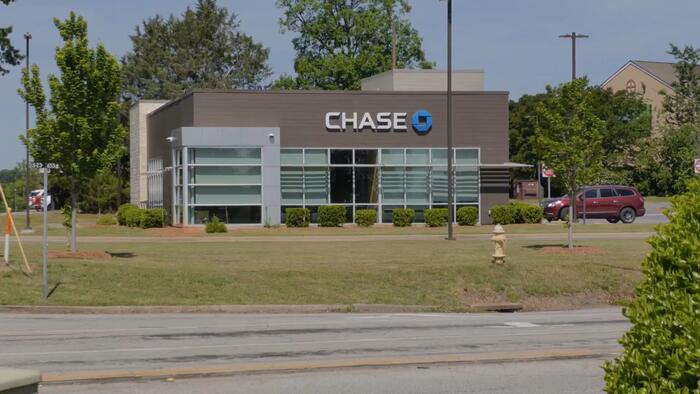
However, that has not been confirmed as the cause of Chase’s problems.
It’s a question many people have when several major services experience problems around the same time.
Chase has described its banking disruption as a technical issue, not a cyberattack.
Howard says there are several possible reasons a system could become unavailable, including overloaded servers, problems with outside technology providers or malicious attacks.
One example is a distributed denial-of-service attack, commonly called a DDoS attack. That’s when attackers flood a website or network with so much traffic that legitimate users have trouble accessing it.
Howard says some of the symptoms can look similar to an ordinary technical failure.
“We don’t know if that’s what’s happening here,” he said.
He also explained that the full cause of a major disruption may not be clear until a company finishes investigating.
The important distinction is that there is currently no confirmed evidence linking these recent outages or establishing that a coordinated cyberattack caused them.
Howard believes AI could create another challenge for the technology systems people use every day.
Artificial intelligence requires enormous amounts of computing power. As companies expand their AI services, demand for data centers continues to grow.
Howard worries that if businesses don’t have enough backup capacity, an outage at one facility could place additional pressure on others.
He compares it to an electrical brownout, when demand strains the power supply.
“So we’re going to have more data outs, if you will, that if we don’t have the computing capacity as a result of all the AI that’s coming on board, you may not get access to your systems,” Howard said.
He believes these disruptions could become more frequent.
“I fully expect this is going to be a common occurrence that you’ll see happen more and more,” Howard said. “Hopefully, the outages are shorter and fewer between, but we’re more and more susceptible to that challenge every single day.”
For customers unable to check their balances or access online banking, Howard says there’s no reason to immediately assume their money has been stolen.
“The American banking system is very secure. It’s not something that I would worry about,” he said.
Howard explained that a technical problem can temporarily prevent customers from accessing their accounts without affecting the money held in those accounts.
He said his bigger concern for individual customers is making sure their login information is protected.
That includes turning on multifactor authentication, or MFA.
MFA adds another step when someone tries to access an account. Along with a password, a customer might need to enter a code, use a passkey or confirm their identity through a phone.
That extra protection can make it harder for someone to break into an account, even if they obtain the password.
Howard says people don’t need to panic or rush out to stockpile supplies.
Instead, he recommends thinking about what they would need if they couldn’t access certain digital services for a few days.
“Can you survive three days without being digitally connected? Can you survive five days?” Howard asked. “Those are things that every American needs to be thinking about.”
Here are four steps to consider:
1. Keep some emergency cash available
If a card reader or payment processing system goes down, cash may be the easiest way to pay for gas, groceries or other essentials. Howard suggests keeping a modest amount somewhere safe, based on what you can afford.
2. Have a few days of basic supplies
Keep enough food, drinking water and other essentials on hand so you aren’t completely dependent on making a purchase during a disruption.
3. Make a backup plan
Think about how you would pay for necessities, contact family members or access important information if an app or online service stopped working.
4. Protect your bank accounts with multifactor authentication
Turn on the additional security options available through your bank. Use strong, unique passwords and avoid sharing verification codes.
Howard says preparation doesn’t have to be complicated.
“For the normal individual, like I say, I think you just need to think about if you are down for the next two to three days, what would you need in order to be comfortable and to survive during that time?” he said. “How much cash do you need on hand? How much water and fuel? And food, do you need on hand? You don’t need a lot.”
Beyond the technical problems themselves, Howard says consumers should be especially careful about suspicious messages claiming something is wrong with their bank accounts.
He worries scammers could use news of the disruptions to trick customers into clicking fake password-reset links.
“There’s going to be a flood of scammers that are going to come out and say, hey, your Wells Fargo account was compromised and you need to go back and reset all of your passwords,” Howard warned.
These messages may appear to come from a legitimate financial institution and may urge customers to act immediately.
If you receive an unexpected text, email or phone call claiming your account has been compromised, don’t click the link or provide your password or verification code.
Instead, open your bank’s official app, type its website address yourself or call the number on the back of your bank card.
A legitimate bank may sometimes require a password reset, but you should verify that request independently rather than following an unexpected message.
Howard says companies should also prepare for disruptions instead of relying on a single technology provider for everything.
He recommends that businesses develop backup plans and consider using different systems so one company’s failure doesn’t bring their entire operation to a halt.
For consumers, the message is much simpler.
“We should all have some cash,” Howard said.
He pointed to something as ordinary as stopping for gas. If a payment system isn’t working, a driver who relies entirely on a credit card could find themselves unable to fill up.
It’s one example of how a major technology problem can quickly become a personal inconvenience.
And while there’s no way to predict exactly when the next outage will happen, Howard says a little preparation now can make a big difference later.
The takeaway: Don’t assume every outage is a cyberattack, don’t panic if an app stops working and don’t wait until technology fails to figure out your backup plan.


